
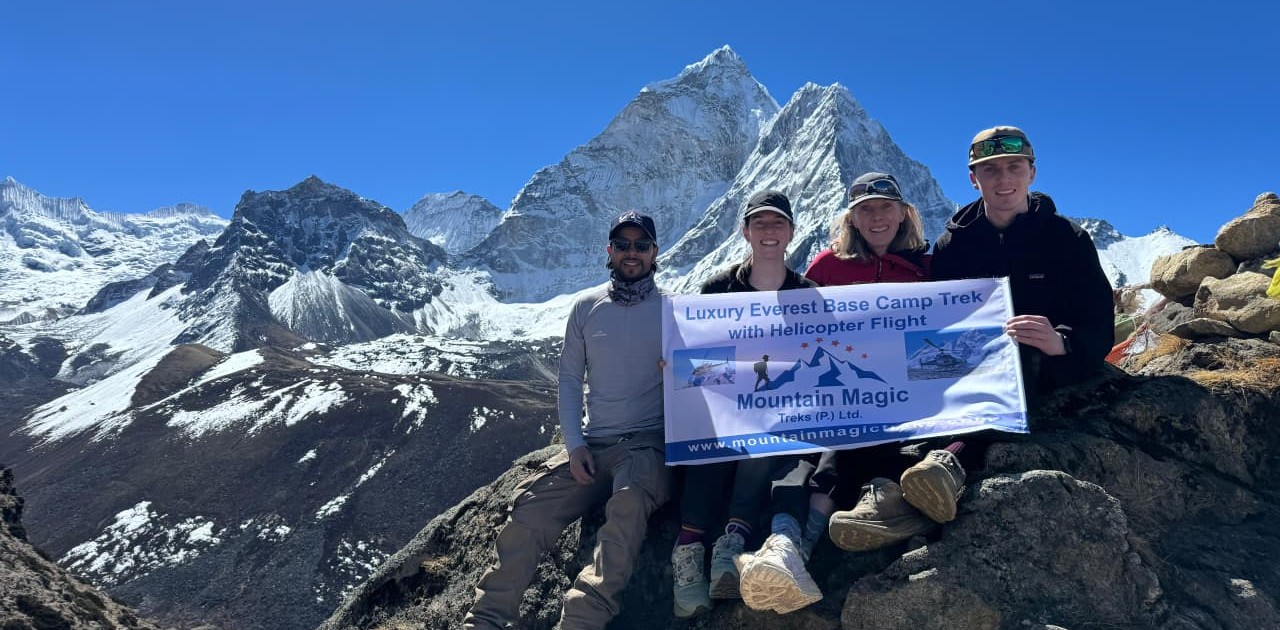
Some mountain journeys are remembered for the destination. Others stay with you because of everything that happens along the way. The trail to Everest Base Camp belongs to the second group. The walk takes you through quiet villages, deep valleys, Buddhist monasteries, high mountain passes, and some of the most famous scenery in Nepal.
The Everest Base Camp Trek with helicopter return gives you a chance to enjoy this experience while making the return journey much shorter. Instead of spending several more days walking downhill after reaching the Everest region, you can take a helicopter back, depending on weather and flight conditions.
This makes the trek appealing to travelers who want a real Himalayan adventure but have limited time.
Begin With the Magic of the Khumbu
The adventure starts with a journey from Kathmandu toward Lukla. Once you arrive, the atmosphere changes almost immediately.
The busy streets and traffic of Kathmandu are replaced by mountain paths, fresh air, and small settlements.
From Lukla, you begin walking through the Khumbu region. The first part of the trail passes through green hills and follows the Dudh Koshi River.
Your First Mountain Morning
The early days are a chance to settle into the rhythm of trekking.
You walk for several hours, stop for meals, meet local people, and spend nights in simple mountain lodges.
There is no need to rush. Your body is also beginning to adjust to the elevation.
The Everest Base Camp Trek with helicopter return is not only about reaching Base Camp quickly. The lower sections are important because they introduce you to the landscape and culture of the region.
Discover Namche Beyond the Shops
Namche Bazaar is often described as the main town of the Everest region. It is built into a steep mountain slope and serves as an important stop for trekkers, guides, and local communities.
You can find small stores, bakeries, cafes, and trekking shops here.
But Namche has another important role.
Give Your Body a Chance
The itinerary allows time for acclimatization around Namche.
Rather than simply sitting inside your lodge all day, you can take a short hike and explore the surrounding area.
This gives you a chance to see more of the mountains while allowing your body to adjust before you climb higher.
Altitude should never be treated casually. Even fit travelers can feel its effects.
Follow the Trail Into Sherpa Country
As you leave Namche, the trail becomes quieter.
You pass through forests, cross bridges, and walk along mountain paths that connect small communities.
The route toward Tengboche is especially memorable because of its combination of natural beauty and local culture.
Look Beyond the Big Peaks
It is easy to focus only on Everest.
However, the journey offers much more.
Notice the stone walls, prayer flags, mani stones, wooden homes, and small fields around the villages. These details show how communities have adapted to life in a challenging mountain environment.
The Everest Base Camp Trek with helicopter return gives you time to experience this lifestyle instead of simply flying directly to the high mountains.
Find Peace at Tengboche
Tengboche is one of the best places to slow down and appreciate the setting.
The famous monastery sits among dramatic mountain scenery. The peaceful surroundings create a completely different feeling from the busy streets travelers may have left behind in Kathmandu.
Let the Mountains Set the Mood
You do not need to fill every moment with activity.
Sit quietly for a while. Watch the clouds move across the peaks. Listen to the wind.
These simple moments can become some of the strongest memories from the trip.
The mountains do not need entertainment. They provide enough on their own.
Enter the High Valley of Dingboche
The trail continues upward toward Dingboche.
The scenery gradually changes as the elevation increases. Trees become less common, and the valley begins to look wider and more rugged.
At this point, the physical side of the trek becomes more noticeable.
A Different Kind of Walking
You may find yourself taking shorter steps than you did near Lukla.
That is normal.
At higher elevations, your body has less oxygen available. Walking slowly helps you manage your energy.
The Everest Base Camp Trek with helicopter return includes another acclimatization period around Dingboche, giving trekkers time to adjust before continuing upward.
Reach Gorakshep and the Final Trail
Gorakshep is one of the last major stopping points before Everest Base Camp.
The landscape here is stark and powerful. Rocks, glaciers, and enormous peaks dominate the surroundings.
From Gorakshep, the route toward Base Camp follows rough terrain near the Khumbu Glacier.
The Moment You Have Been Waiting For
After days of walking, reaching Everest Base Camp feels different from seeing it in a photograph.
You can look back at the distance you have covered and realize how much the landscape has changed since Lukla.
Take photos, enjoy the scenery, and give yourself time to appreciate the moment.
Finish the Trek From the Sky
This is where the Everest Base Camp Trek with helicopter return takes a different path from a traditional Everest journey.
After completing the high-altitude trekking section, you do not have to spend several days walking back through the same valley.
Instead, the return is made by helicopter, subject to safe flying conditions.
A New View of Familiar Ground
The helicopter gives you a completely different perspective.
Trails that looked long while walking become thin lines across the mountains.
Villages appear tiny below.
Deep valleys, glaciers, rivers, and ridges form one enormous landscape.
After experiencing the Himalayas on foot, seeing them from the air creates a memorable final chapter.
Keep Your Plans Flexible
Mountain weather can change quickly.
Clouds, wind, visibility, and other conditions may affect helicopter operations.
For this reason, travelers should avoid making important connecting plans too close to the expected flight.
Flexibility Can Save Stress
A flexible schedule gives you room to deal with delays.
This is especially important if you have an international flight or another major plan after returning to Kathmandu.
The Everest Base Camp Trek with helicopter return is an adventure in a natural environment. Nature does not follow a fixed timetable.
What You Take Home
The best souvenir from an Everest trek is not something bought in a shop.
It is the memory of walking beside mountain rivers, seeing prayer flags move in the wind, sharing tea with other trekkers, and standing beneath enormous peaks.
The Everest Base Camp Trek with helicopter return adds one more memory: watching the Himalayan landscape disappear below you as you fly away.
You return home with more than photographs. You return with a story.
Final Thoughts
The Everest Base Camp Trek with helicopter return offers a balanced way to experience one of Nepal’s most famous trekking routes.
You still walk through the Khumbu Valley, spend time in Sherpa communities, acclimatize at key stops, reach Everest Base Camp, and climb Kala Patthar.
The major difference comes at the end.
Instead of retracing the entire trail on foot, the helicopter lets you leave the high mountains much faster, while giving you an unforgettable aerial view.
For travelers who want adventure without adding several return days, this journey can be a smart choice. Prepare well, respect the altitude, stay flexible, and let the mountains become the main part of your story.
Frequently Asked Questions
Is the Everest Base Camp Trek with helicopter return suitable for busy travelers?
Yes. The helicopter return can reduce the number of days needed compared with walking back along the entire route.
Do I still need good fitness?
Yes. The trekking section remains physically demanding and includes long walking days and high elevations.
What makes Kala Patthar special?
It provides one of the most impressive viewpoints toward Mount Everest and reaches about 5,545 meters.
Can weather change the helicopter schedule?
Yes. Flights depend on visibility, wind, weather, and safe operating conditions.
What should I remember most about the trek?
Do not focus only on reaching Base Camp. The villages, people, landscapes, monasteries, and small moments along the trail are a major part of the experience.

